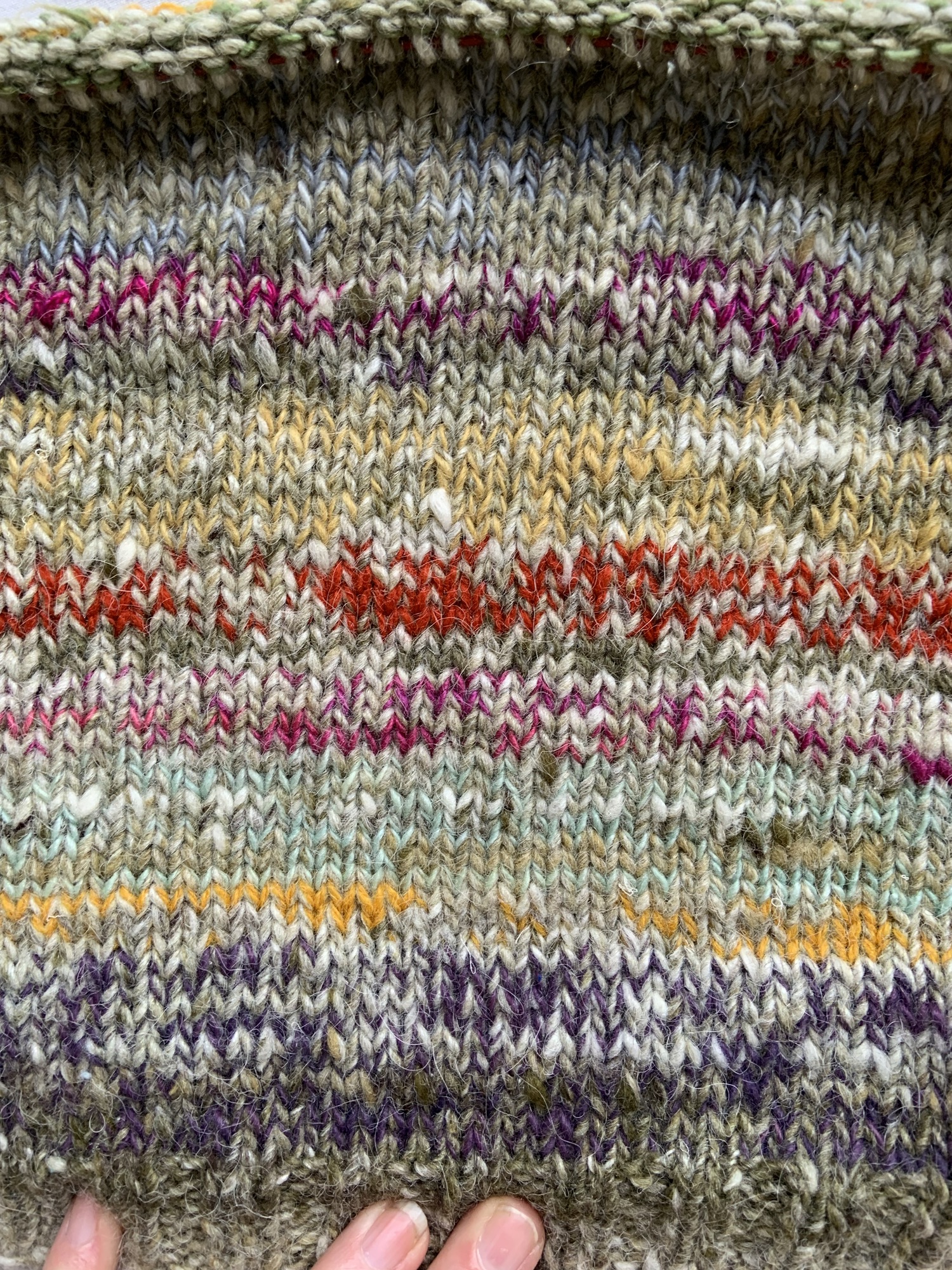

Lately I have been taking a bit of a break from stranded colorwork for a more relaxed approach. Don’t get me wrong; I still adore color in my knits but sometimes I just don’t want to think about it too hard. Thus, I’ve fallen back into the fun technique of marled knitting. You might not have ever heard about this term but I guarantee that you have seen it and likely even own an example or 2.

The first dictionary definition of marl describes a kind of sedimentary rock but the second definition, which has been around a good while, talks about holding 2 yarns together.
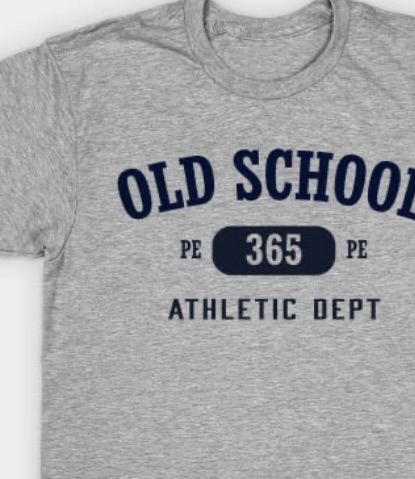
If you have any athletic T-shirts or sweatpants with this “heathered” appearance, you own a gray marl knit piece! These are actually produced with separate colored yarns held together, most often black and white. Of course, for a T-shirt, the yarns are microscopic but you can still easily see the overall pleasantly mottled fabric.
So…why not in a hand knit? Why not combine 2 or more strands together for some interesting color play? You don’t see it too hard fern at all. I think there are a couple of reasons for this. First of all, gauge starts to be an issue when combining any significant weights of yarn together. So that takes some finagling. Secondly, you ended up using a lot of yarn potentially. But if some of those yarns are scraps or leftovers, you can mitigate the second issue. I recently used up a bunch of bulky, semi bulky, worsted and fingering yarn making some very thick and squishy caps. Gauge wasn’t much of an issue since thick caps are what I wanted and the ribbing produced a very forgiving and expandable knit fabric.

Aren’t these grand? I was using 3-4 strands together at a time in order to get to a super bulky weight. If you look at the yellow/purple stripes on the lower right cap you can see that equal weight yarns held together generate that “heathered” appearance you see in athletic wear.
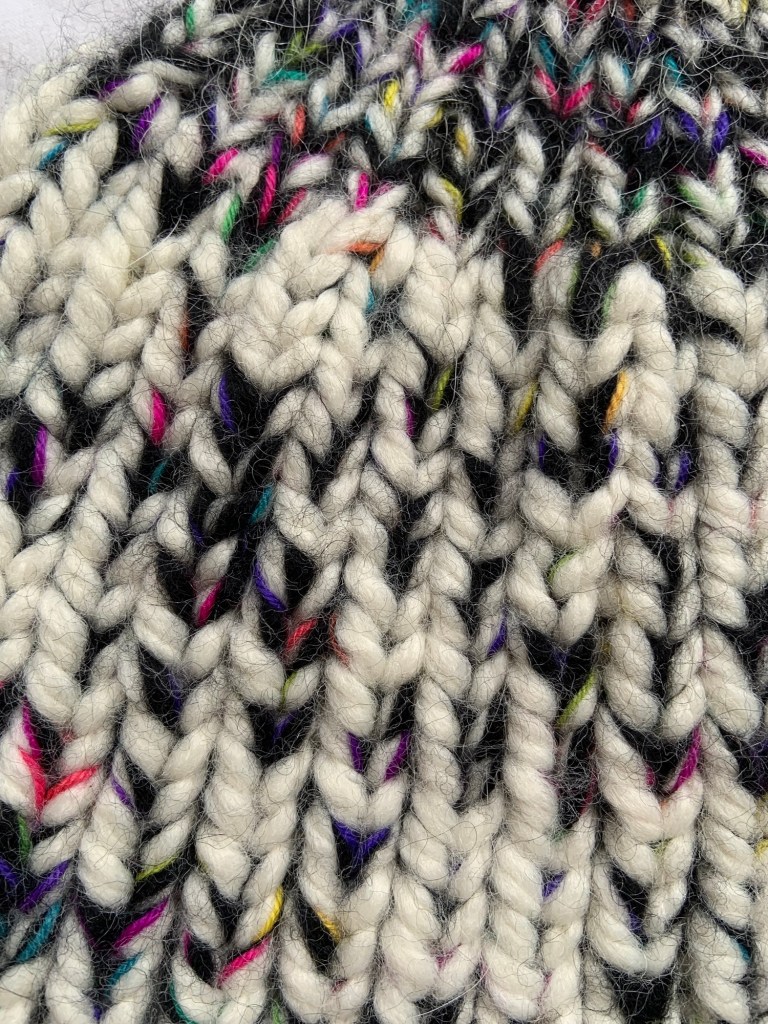
But if you use unequal weights of yarn as in the closeup above, you get a more speckled or random color distribution. In this cap I’ve used a bulky natural yarn, a black worsted and a multicolor fingering. What a cool effect, right??
So…how about a freebie pattern so you can make your own cap with multiple yarns and play around with colors or stripes or color blocking?? Here ya go:
Marled Padding cap pattern for adults:

Supplies: US size 5 needles in a short circular length and DPNs. Stitch marker, tapestry needle, multiple yarns from bulky to fingering weight.
Gauge: 3-4 yarns combined to equal 16 ST=5” using 1 bulky, 1 or 2 worsteds and 1 or 2 fingering yarns.
Cast on 73 st with circular US size 5 circular needles. Turn. K1, P1 to last ST and then K2TOG with first ST to join in the round. Mark BOR such that a K1 is your first ST of the round. Work ribbing as established for 4” for a no fold cap or 8” for a folded brim cap. Begin decreasing for the crown.
Decrease row 1: [work 6 ST as they appear, K2tog] 9X. Work ST as they appear for 5 rounds. Decrease row 2: [work 5 ST as they appear, K2tog] 9X. Work ST as they appear for 4 rounds. Switch to DPNs. Decrease row 3: [work 4 ST as they appear, K2tog] 9X. Work ST as they appear for 2 rounds. Decrease row 4: [work 3 ST as they appear, K2tog] 9X. Drop the smallest strand out of your yarn assembly and work ST as they appear for 1 round. Decrease row 5: [work 2 ST as they appear, K2tog] 9X. Decrease row 6: [work 1 ST as it appears, K2tog] 9X. Decrease row 7: [K2tog 9X]. Cut remaining yarns and thread through the final 9 ST. Pull tight and weave in your loose ends.

Most recently I pulled some Noro yarn out from my stash:
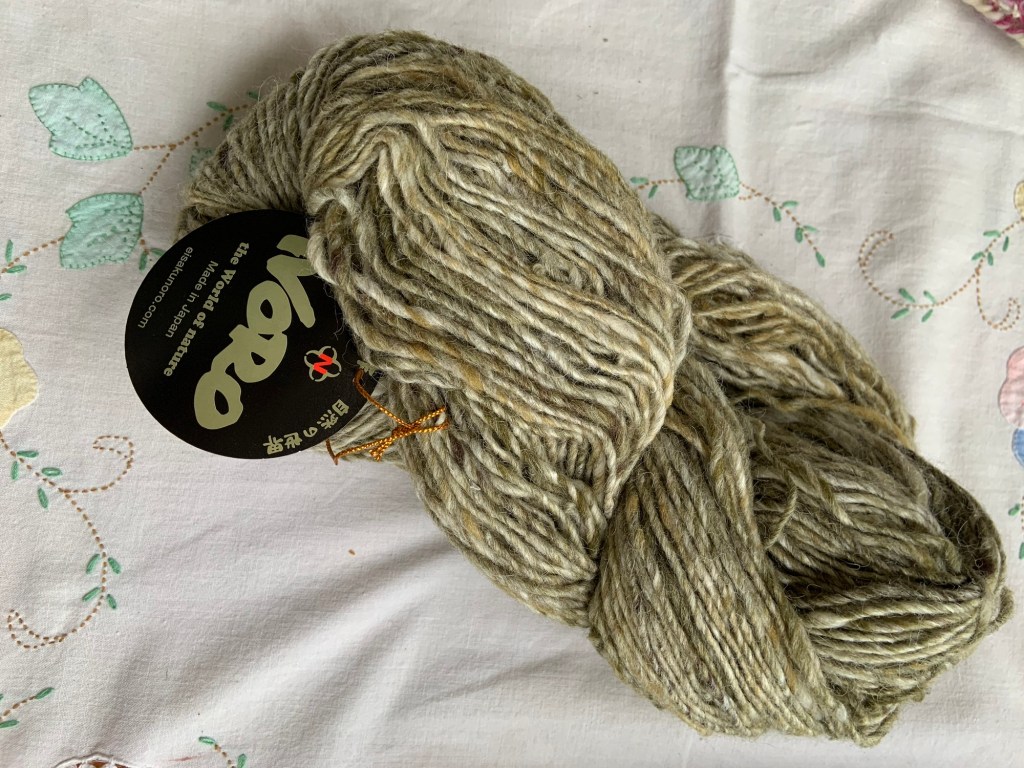
It’s lovely yarn, to be sure, but I’ve been brainstorming what to knit with it for, gulp, years actually. Finally, after knitting all those caps, I thought to combine with some fingering scraps and see what happens.

Here are the scraps, leftovers or aborted project yarns that have been lurking in my stash for a few months to several decades.

And here’s how they look knitted together! I am absolutely in love with the subtle stripes and how they fade in and out. I’m doing random amounts of rows just depending on how I feel and how the colors are playing out with each other. I would say that this is a definite win: marled yarns are definitely an under appreciated technique!

 Lizzie Knitzz
Thanks Lizzie! I’ve got sooooo many bits and pieces of leftover yarn! I’m not a fan of ‘scrappy’ things, but this is a fave look of mine. This is definitely something I’ll be doing.
Plus, easy-peasy Christmas gifts coming right up! 😁🎄
Melissa!
LikeLike
You are most welcome! These knit up soooo fast!
LikeLike
Funny, I’ve been doing just this for the last couple of days. I needed a thicker yarn and didn’t have any so I dove into my stash and voilà! Marled!
LikeLike
It’s something in the air! 😄
LikeLike